


Teeth Cleaning vs. Whitening: What's the Difference?
Updated: May 28
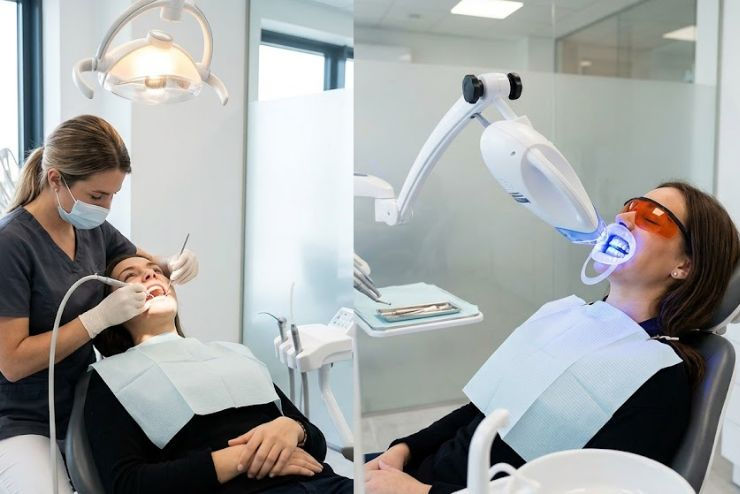
People book whitening appointments expecting a clean. People book cleans expecting whiter teeth. Both groups usually leave confused about why they did not get what they were after. These are two separate treatments that do completely different things, and mixing them up wastes time and money.
One is a health procedure you need whether you care about your smile or not. The other is a cosmetic treatment that only addresses colour. Knowing which is which helps you get the right result from the right appointment.
What Is Teeth Cleaning?
A professional teeth clean, also called a scale and clean or dental prophylaxis, is a preventative health procedure done by a dentist or dental hygienist. The process has two main stages. First, scaling, where hardened tartar and plaque deposits are scraped away from the tooth surface and below the gumline using specialised tools. Second, polishing, where the teeth are buffed smooth, making it harder for plaque to stick in future.
No amount of brushing at home fully replaces this. Plaque that sits long enough hardens into tartar, and tartar cannot be removed by a toothbrush. Left untreated, it builds up along the gumline and becomes a major driver of gum disease and tooth decay. Regular cleans every six months are the standard recommendation, though those with existing gum problems may need them more often.
What a professional clean does:
Removes hardened tartar and plaque from tooth surfaces and below the gumline
Polishes teeth to reduce future plaque build-up
Lowers the risk of gum disease, cavities, and tooth decay
Removes some surface staining as a by-product of polishing
Freshens breath by eliminating bacteria and trapped food particles
A clean can remove some surface staining and often leaves teeth looking slightly fresher. But this is a side effect of the health procedure, not the purpose of it. The underlying colour of your enamel does not change.
What Is Teeth Whitening?
Teeth whitening is a cosmetic treatment. It has nothing to do with oral health and does not clean teeth in any clinical sense. The purpose is purely colour. Whitening uses a peroxide-based gel to break down stain molecules that have built up inside the enamel over time, changing the actual shade of the tooth from the inside out.
Professional in-chair whitening uses a higher-concentration gel than anything available over the counter. The gel is applied directly to the teeth and activated by an LED light, which speeds up the chemical reaction and helps it penetrate deeper into the enamel. Because the treatment works on the tooth itself rather than just the surface, results are visible in a single session.
What teeth whitening does:
Lightens the natural colour of your enamel
Targets intrinsic stains caused by ageing, coffee, tea, red wine, and smoking
Works by breaking down pigment molecules inside the tooth
Delivers a visible shade change in one session
Does not remove plaque, tartar, or address gum health
Why People Confuse the Two
Both treatments involve someone working on your teeth, both can leave them looking a bit brighter, and both get loosely grouped under "getting your teeth done." But the similarity ends there.
A clean shifts some surface staining during the polishing stage, so teeth can look slightly lighter after a scale and clean. This fools people into thinking cleaning whitens teeth. It does not. What you are seeing is the removal of external buildup, not a change in enamel colour. If the yellowing comes from inside the tooth, which is most common in adults, a clean will not touch it. The same goes in reverse. Whitening does not remove tartar or clean below the gumline. Someone with significant buildup who gets whitening instead of a clean is skipping an important health step.
The Key Differences
What Actually Causes Teeth to Go Yellow?
Extrinsic staining sits on the outer surface of the enamel. It comes from coffee, tea, red wine, dark sauces, and tobacco. This type can be reduced by a professional clean, a whitening toothpaste, or professional whitening. Intrinsic staining is inside the tooth structure itself. As enamel thins with age, the yellow dentine underneath becomes more visible. Years of staining food and drink also saturate the tooth from within, and certain antibiotics taken during childhood can cause it too. A clean has no effect on intrinsic staining. Only a peroxide-based whitening treatment can reach it.
Genetics also play a role. Some people naturally have thicker, whiter enamel than others, which is why two people with identical brushing habits can have noticeably different tooth colours. Most people who brush regularly but still have yellow teeth are dealing with intrinsic staining, not poor hygiene.
Should You Get a Clean Before Whitening?
In most cases, yes. Plaque and tartar on the teeth can block the whitening gel from making even contact with the enamel, which leads to patchy or inconsistent results. A clean gives the gel a better surface to work with and allows it to spread uniformly.
If you are already up to date with your dental cleans, there is no need to book one immediately before whitening. If it has been more than six months, doing a clean first is sensible. Your dentist can also flag any gum issues worth addressing before treatment, since whitening on inflamed gums can cause unnecessary discomfort.
Which One Do You Actually Need?
You need a clean if:
It has been more than six months since your last dental visit
Your gums bleed when you brush
You can feel tartar build-up on your teeth
Your breath has not improved despite regular brushing
You need whitening if:
Your teeth are healthy but the colour bothers you
You brush consistently but your teeth are still yellow
You want a visible shade change, not just a fresher look
You have an event or occasion you want brighter teeth for
You may need both if:
You have not had a clean in a while and also want colour results
In this case, clean first, then whiten once your teeth and gums are in good shape
How Professional In-Chair Whitening Works
A peroxide-based gel is applied directly to the teeth and activated by a cold blue LED light. The light accelerates the process and helps the gel penetrate deeper into the enamel. Sessions run for either 60 or 90 minutes. A 60-minute session typically achieves up to six shades of whitening. A 90-minute session reaches deeper staining and can achieve up to ten shades.
Sensitivity is not common when a properly formulated gel is used. A quality whitening gel includes mineral ingredients that protect enamel during the process. Around 98% of clients experience no discomfort. Where mild sensitivity does occur, it usually clears within 24 to 48 hours.
What Whitening Cannot Fix
Dental restorations such as crowns, veneers, and fillings do not respond to peroxide. They were made to match your tooth colour at the time of fitting and will not change shade with whitening. Natural teeth around them may lighten, which can create a mismatch if the restorations sit in a visible part of the smile.
Staining from certain antibiotics, particularly tetracycline taken during childhood, tends to be deeper and more resistant to whitening. Some improvement is still possible, but results are less predictable than with age or diet-related discolouration. Whitening also does not address structural issues like cracked or worn enamel, which needs restorative treatment first.
After Whitening: What to Expect
Teeth are slightly more porous immediately after a whitening treatment. The enamel has been opened up by the peroxide process and is more likely to absorb colour from food and drink in the first 48 hours. Most people are advised to follow a white diet during this window, avoiding coffee, tea, red wine, tomato-based sauces, and curries, and sticking to lighter foods while the enamel settles.
How long results last depends on diet and lifestyle. People who drink coffee or tea daily or smoke will see faster fading. Most people retain noticeably whiter teeth for up to six months or longer, with habits after the session having a significant impact on the outcome.
Keeping Both in Your Routine
Neither treatment replaces the other. Cleaning is a health requirement regardless of what your teeth look like. Tartar still builds up on white teeth and still needs to be removed on a regular schedule. Whitening sits alongside that routine, not in place of it.
If you have not had a scale and clean recently, that is the place to start. If your teeth are healthy and colour is the concern, professional in-chair whitening is what addresses that.
For anyone who has already had whitening and wants to hold onto the results, the guide on how to make whitening last longer covers what to do in the days and weeks after your session.


